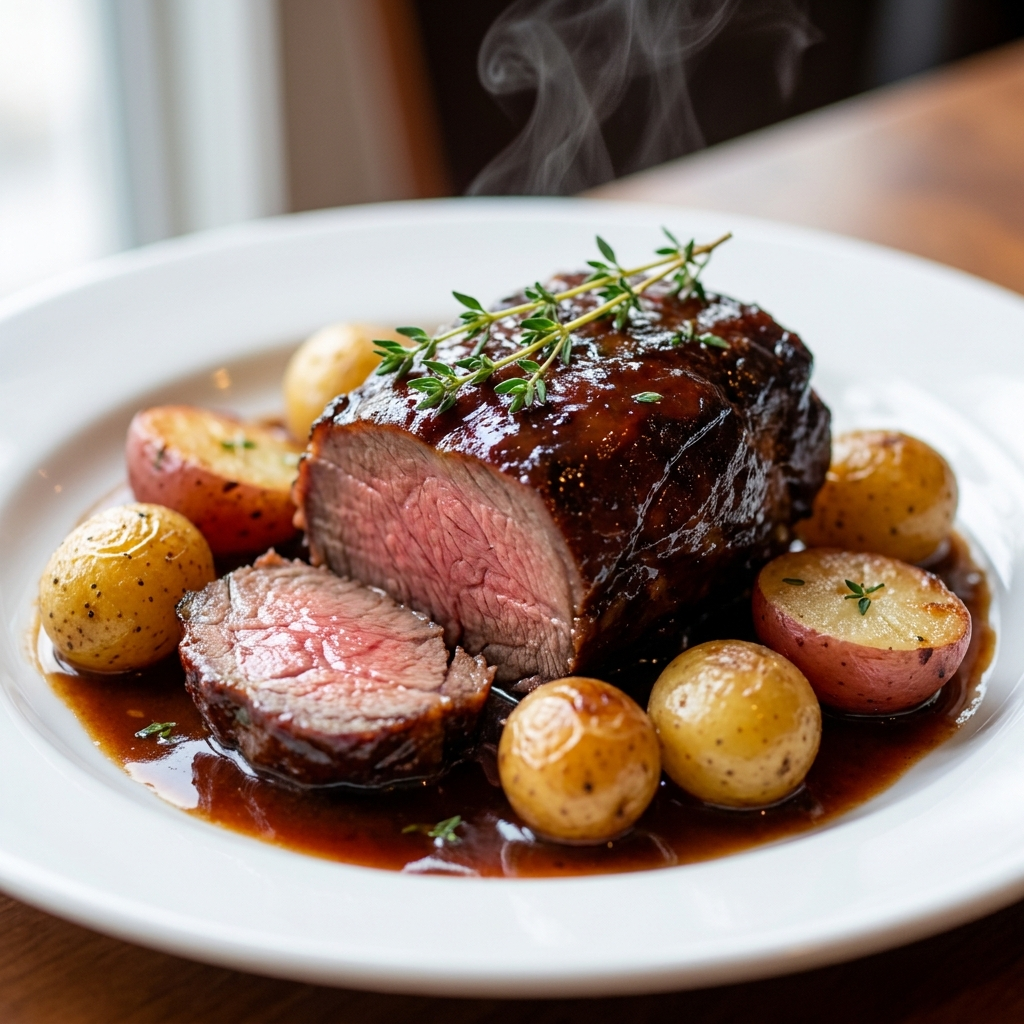
Cider-Braised Beef Cheeks with Rich Flavours
This is the kind of dish that makes a kitchen smell like a Sunday you never want to end. Humble beef cheeks — one of the most underrated cuts a butcher can hand you — are transformed over a few slow, gentle hours into something silken, glossy and deeply savoury. The secret isn't a long list of fancy techniques; it's patience, a good dry cider, and layering your flavour from the very first sear. Get the seasoning right and the rest practically cooks itself.
Serves: 4 | Prep: 25 minutes | Cook: 3 hours 30 minutes | Difficulty: Easy (mostly hands-off)
Why this recipe works
Cheeks are a hard-working muscle, packed with collagen. Cook them fast and they're tough; cook them low and slow and that collagen melts into the sauce, giving you that luxurious, lip-sticking richness you usually only get in a fine-dining braise. The dry cider cuts through the richness with a gentle orchard sweetness, while a well-built seasoning base does the heavy lifting on flavour — so every forkful is seasoned all the way through, not just on the surface.
Ingredients
For the beef
- 4 large beef cheeks (about 1.2–1.4 kg), trimmed of sinew
- 2 tbsp steakhouse rub & seasoning — your main flavour driver, rubbed in generously before searing
- 1 tsp SPG blend (salt, pepper & garlic) for an extra savoury backbone
- 2 tbsp plain flour, for dusting
- 3 tbsp olive oil or beef dripping
For the braise
- 2 onions, finely diced (or 2 tsp onion granules / chopped onion to deepen the base)
- 2 carrots, cut into chunks
- 2 celery sticks, sliced
- 4 garlic cloves, crushed (or 1 tsp granulated garlic)
- 500 ml dry cider
- 400 ml good beef stock
- 2 tbsp tomato purée
- 1 tbsp all-purpose seasoning to round out and balance the sauce
- 1 tsp smoked paprika for a warm, gentle depth
- 3 sprigs fresh thyme (plus extra to garnish)
- 1 sprig rosemary
- 2 bay leaves
- ½ tsp crushed black pepper
- 1 tsp soft brown sugar or honey
To serve
- 600 g baby/new potatoes
- A knob of butter and a little extra thyme
- A pinch of SPG or sea salt to finish the potatoes
Method
- Season first, and season well. Pat the cheeks completely dry. Rub them all over with the steakhouse rub & seasoning and the SPG blend, pressing it in. Leave for 15–20 minutes (or overnight in the fridge) so the salt can begin working into the meat. Just before cooking, dust lightly with flour.
- Build a deep sear. Heat the oil in a heavy casserole over medium-high heat. Sear the cheeks 3–4 minutes per side until darkly caramelised on all faces — this colour is pure flavour. Don't crowd the pan; do it in batches. Lift out and set aside.
- Soften the aromatics. Lower the heat. Add the onions, carrots and celery with a pinch of salt and cook 8–10 minutes until soft and golden. Stir in the garlic, tomato purée, smoked paprika and all-purpose seasoning; cook for 2 minutes until fragrant and slightly darkened.
- Deglaze. Pour in the cider, scraping up every sticky brown bit from the base of the pan. Let it bubble and reduce by about a third — this concentrates the orchard sweetness.
- Braise low and slow. Return the cheeks and any resting juices to the pan. Add the stock, brown sugar, thyme, rosemary, bay leaves and crushed black pepper. The liquid should come about two-thirds up the meat. Bring to a gentle simmer, cover, and transfer to a 150°C (fan 130°C) oven for 3–3½ hours, until the cheeks are completely tender and yielding to a spoon.
- Roast the potatoes. About 40 minutes before serving, boil the baby potatoes until just tender, drain, then roast or pan-fry in butter with a little thyme and a pinch of SPG until golden and glossy.
- Finish the sauce. Lift the cheeks out and keep warm. Discard the woody herbs and bay. Skim any excess fat, then reduce the sauce on the hob until it coats the back of a spoon — rich, dark and glossy. Taste and adjust with a final pinch of seasoning.
- Plate up. Spoon a cheek onto each warm plate, nestle the golden potatoes alongside, ladle over that mahogany sauce and crown with a fresh sprig of thyme.
Chef's tips
- Season the night before. Rubbing the cheeks with the steakhouse seasoning and SPG a day ahead turns a good braise into a great one — the flavour goes right to the centre.
- Don't rush the sear. That deep brown crust is where most of the savoury depth comes from. If it's pale, the sauce will be too.
- Low and slow is non-negotiable. If the sauce ever bubbles hard, drop the temperature. A lazy simmer keeps the meat meltingly tender.
- Make it ahead. Like most braises, this is even better the next day. Cool, chill overnight, then reheat gently — the flavour deepens beautifully.
Serve with a glass of the same cider you cooked with, and you've got a restaurant-worthy plate made entirely in one pot. Bon appétit.

Leave a comment
This site is protected by hCaptcha and the hCaptcha Privacy Policy and Terms of Service apply.